
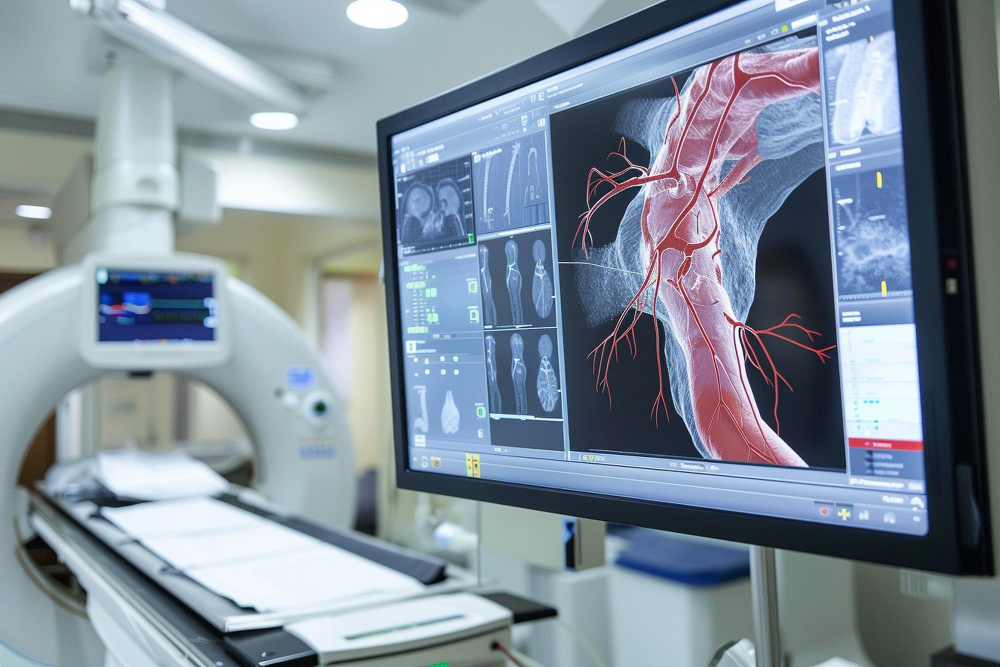
CT coronary angiography is a non-invasive heart test that uses a CT scanner to create detailed images of the heart’s blood vessels. Doctors use this test to check for blockages or narrowing in the coronary arteries. Because it is less invasive than traditional angiography, many people prefer it. In this blog, you will learn what to expect, the benefits, and the risks of CT coronary angiography. This information can help you feel more prepared and informed.
What is CT Coronary Angiography?
CT coronary angiography, also called a CT angiogram, is a special heart scan. It uses X-rays and a computer to make clear pictures of the heart’s arteries. Unlike traditional angiography, this test does not need a tube placed in the artery. Instead, a small needle is used to inject a contrast dye into a vein. The dye helps the arteries show up clearly on the scan. As a result, doctors can see if there are any blockages or other problems.
Why is CT Coronary Angiography Done?
Doctors order a CT coronary angiography for several reasons. Often, it helps diagnose coronary artery disease. This disease happens when the heart’s blood vessels become narrow or blocked. Sometimes, doctors use this test to check for other heart problems or to plan treatment. In many cases, it is chosen because it is a non-invasive heart test.
How to Prepare for the Test
Before your CT coronary angiography, your doctor will give you clear instructions. Usually, you should not eat or drink for a few hours before the test. Sometimes, you may need to avoid caffeine or certain medicines. Your doctor may also ask about allergies, especially to contrast dye. It is important to tell your doctor about any health problems or medicines you take. This helps keep you safe during the test.
What Happens During the Procedure?
First, you will change into a hospital gown. Next, a nurse will place a small needle in your arm to give the contrast dye. Then, you will lie on a table that slides into the CT scanner. The scanner is a large, doughnut-shaped machine. While the scan takes place, you may be asked to hold your breath for a few seconds. The whole CT coronary angiography procedure usually takes about 30 minutes. After the scan, you can often go home the same day.
Benefits of CT Coronary Angiography
CT coronary angiography offers many benefits. For example, it is a non-invasive heart test, so there is no need for a tube in the artery. Also, it gives quick and clear images of the heart’s blood vessels. Because of this, doctors can diagnose problems early and plan the best treatment. In addition, the test is usually safe and does not require a long hospital stay.
Risks and Limitations
Although CT coronary angiography is safe for most people, there are some risks. The test uses a small amount of radiation. For most, this is not a problem, but it may not be suitable for pregnant women. The contrast dye can cause allergic reactions in some people. Rarely, the dye may affect kidney function, especially in those with kidney disease. Also, the test may not work well if your heart beats very fast or irregularly. It is important to discuss CT angiogram risks with your doctor before the test.
After the Test: What to Expect
After the CT coronary angiography, you can usually return to normal activities. However, you should drink plenty of water to help flush the dye from your body. If you feel unwell or notice any rash, swelling, or trouble breathing, contact your doctor right away. Your doctor will review the scan and explain the results. Sometimes, more tests or treatment may be needed based on the findings.
Frequently Asked Questions
In summary, CT coronary angiography is a safe and effective way to check for heart artery problems. It is quick, non-invasive, and helps doctors plan the best care. For more details or to see if this test is right for you, consult a cardiologist for personalized advice about CT coronary angiography.